Category overview
About motorcycle footwear
Riding shoes look like casual high-tops but add ankle cups, toe and heel reinforcement and a gear-shift pad. Touring boots extend the shaft for weather and ankle coverage. Sport boots add external sliders and shin plates.
Abrasion and impact protection depend on materials, layering and stitching, and can only be confirmed by testing. Under EN 13634, motorcycle footwear is tested for properties such as abrasion, impact cut and transverse rigidity; we do not claim CE certification or EN 13634 compliance without valid documentation.
Closure systems (laces with strap, zips with hook-and-loop flaps, buckles or rotary closures) are chosen for security on the bike and ease of fitting.
Intended buyers
- Motorcycle apparel and equipment brands
- Distributors of riding gear
- Private-label brands adding footwear to a riding range
Reference styles
What we develop in this category
Starting points, not stock products: each style is made to your own design and specification. Choosing one is optional.
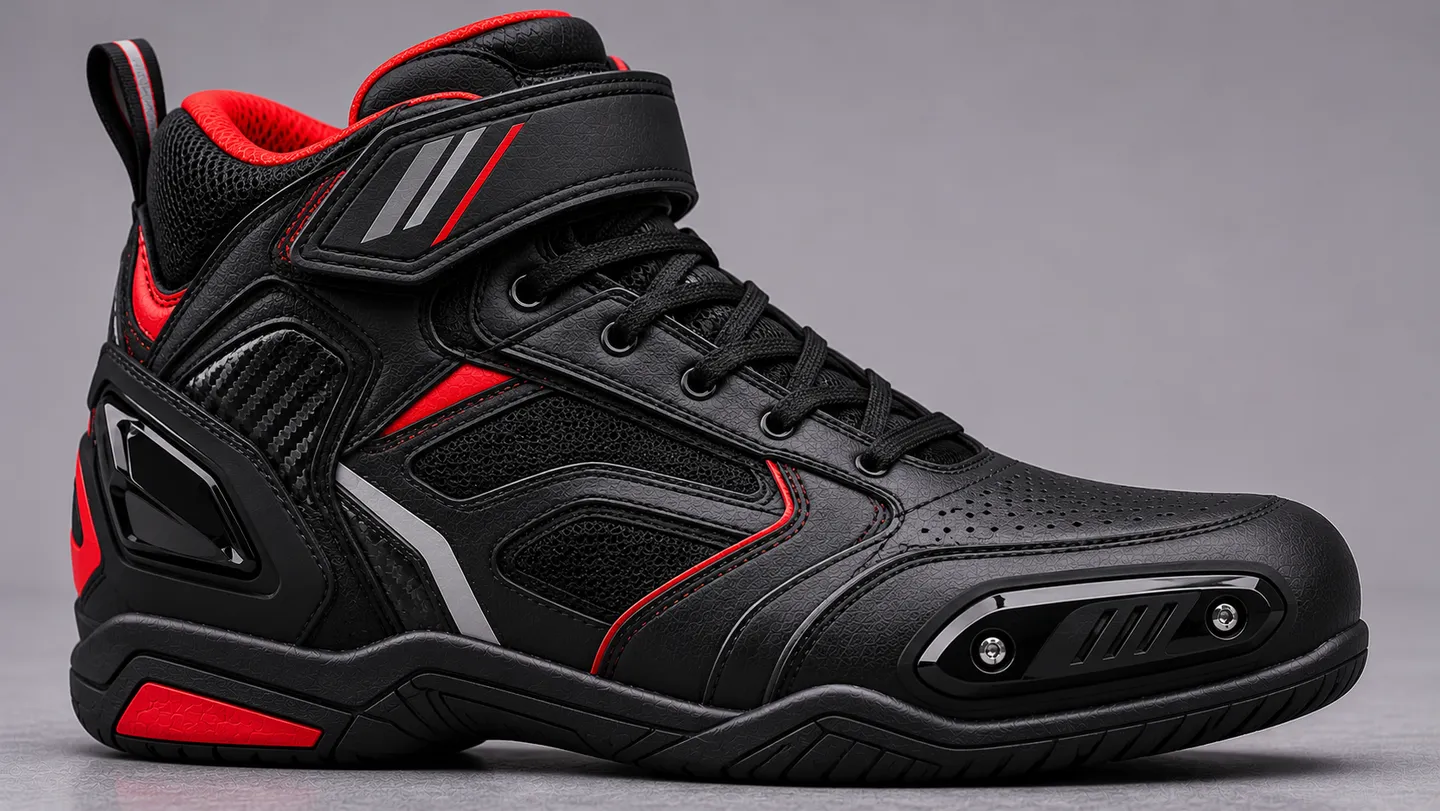
KF-MOT-001
Motorcycle Riding Shoes
High-top casual look with ankle cups, toe and heel reinforcement and a shift pad.
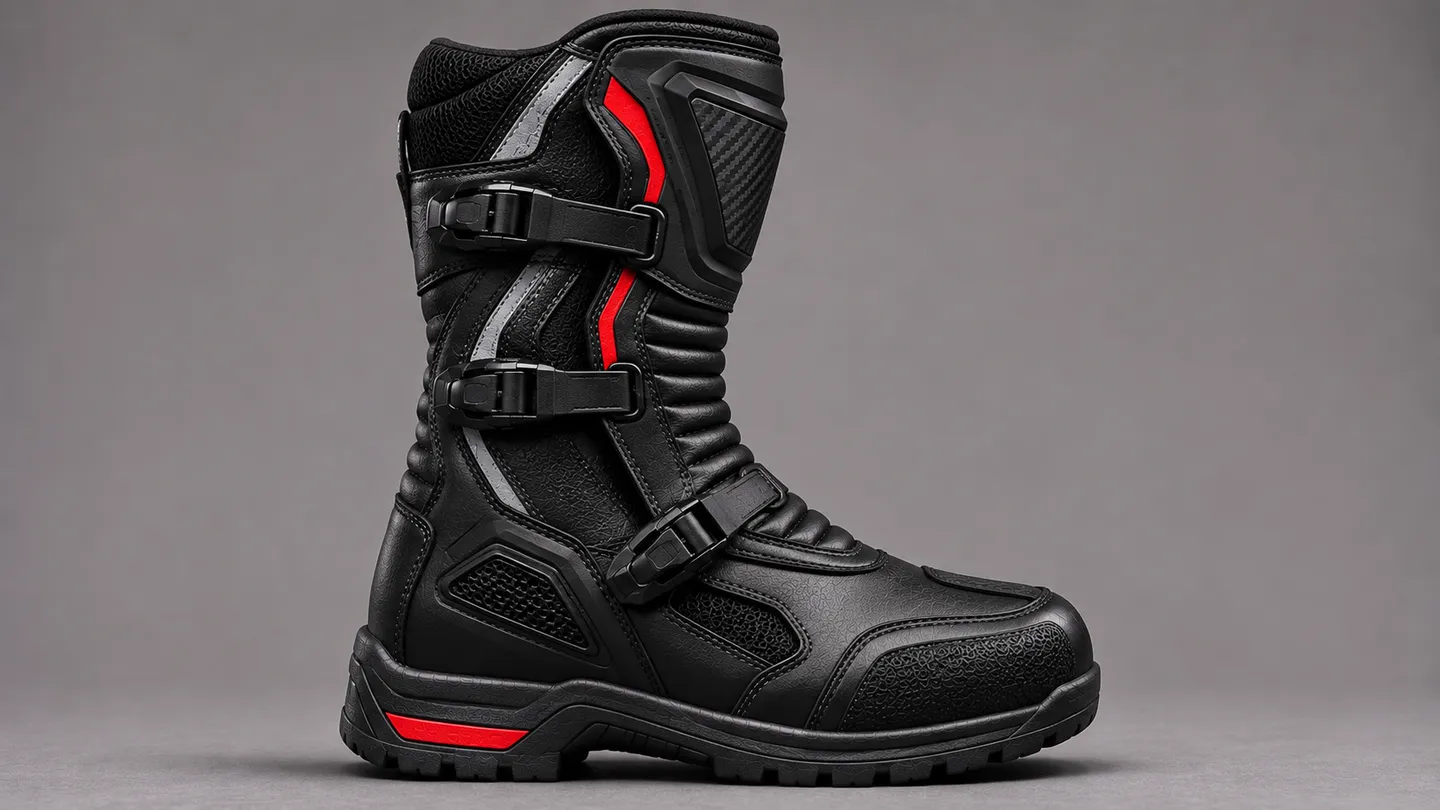
KF-MOT-002
Motorcycle Touring Boots
Mid-to-tall shaft with zip and hook-and-loop closure and a grippy rubber sole.
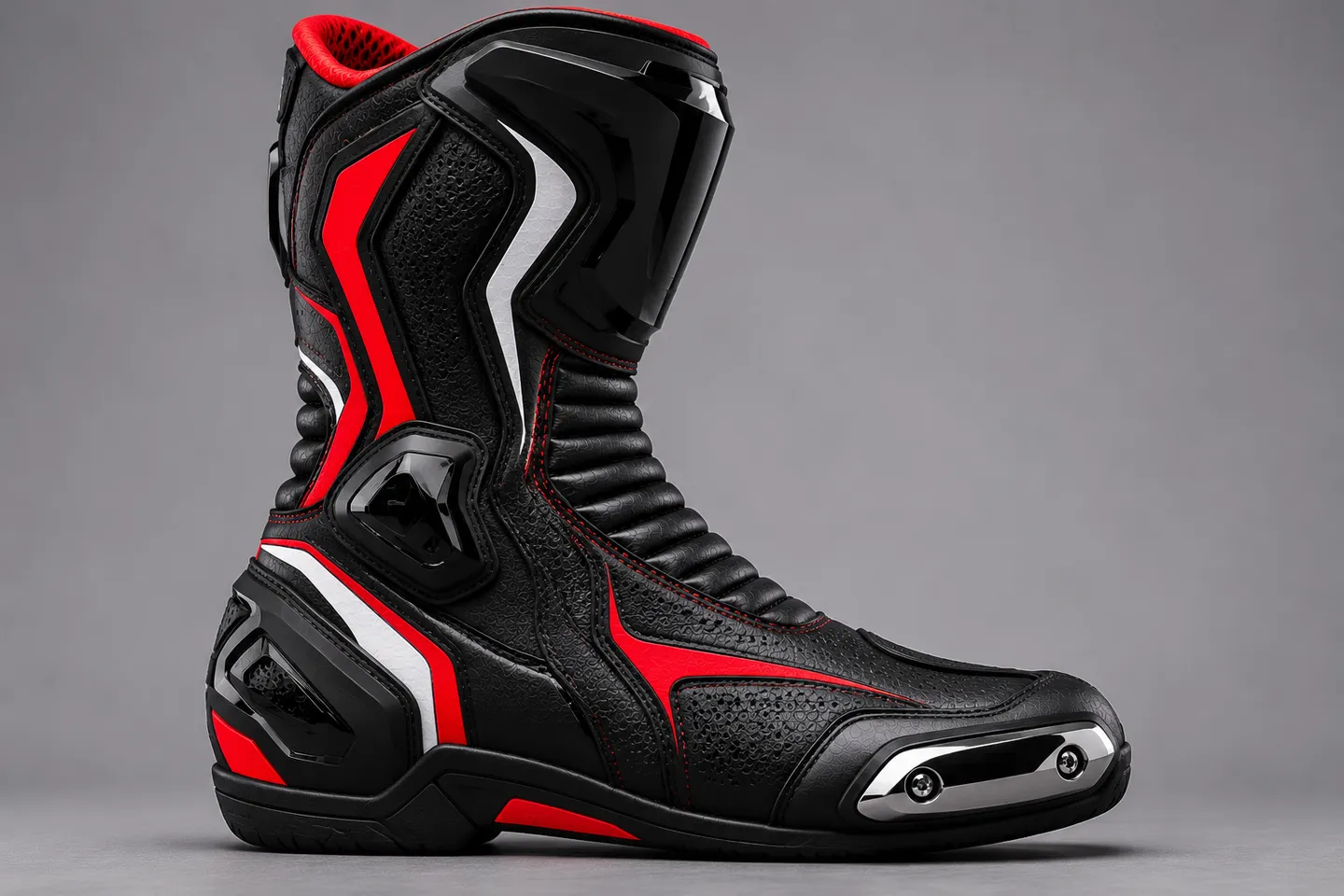
KF-MOT-003
Sport Riding Boots
Tall shaft with shin plate, buckle closure and external reinforcement areas.
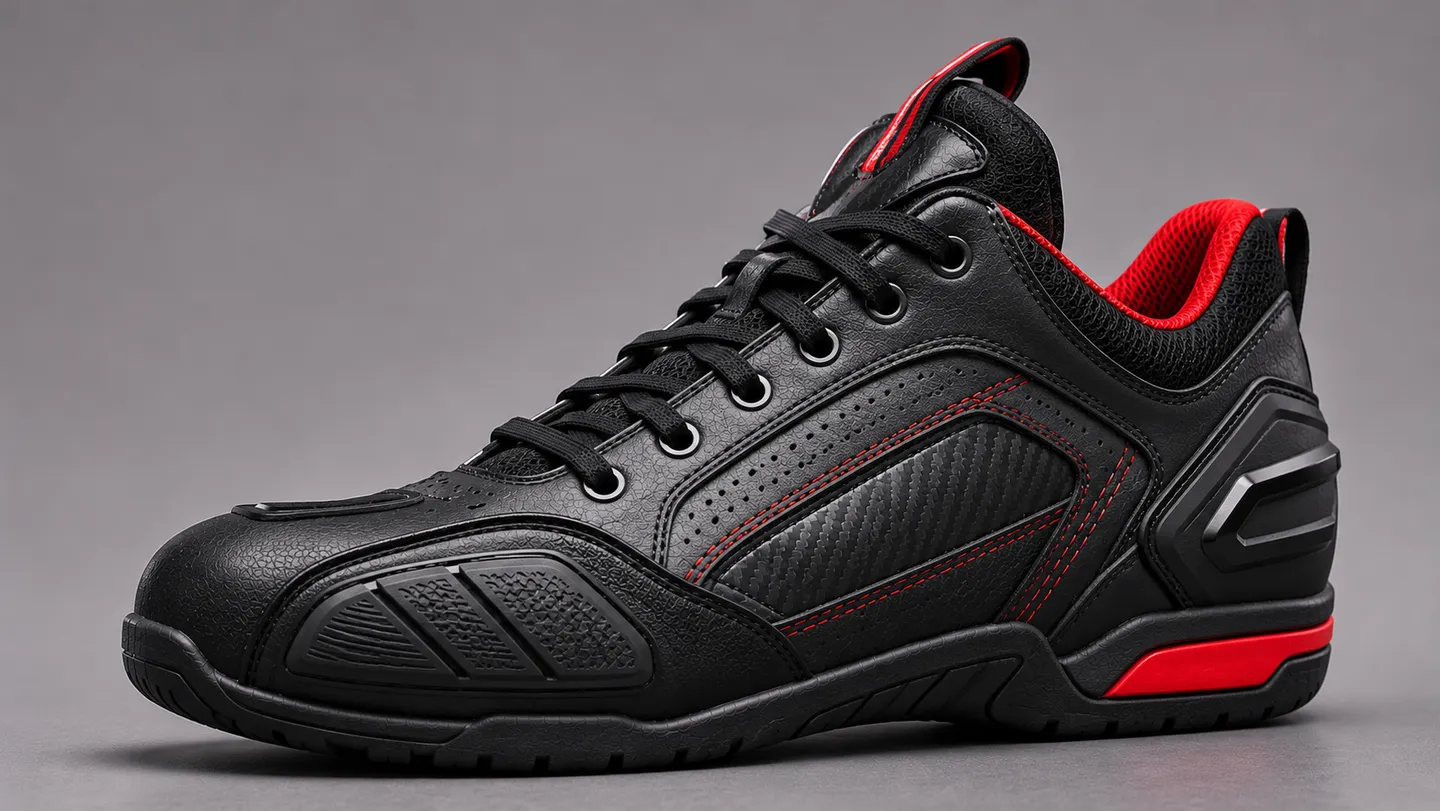
KF-MOT-004
Reinforced Riding Shoes
Toe and heel cups with a lace-cover strap. Protective claims require accredited testing.


Design references shown for custom manufacturing enquiries. Final specifications are confirmed during development.
Technical considerations
What matters when developing motorcycle footwear
The design decisions we work through with you before sampling. Each is confirmed on samples, not assumed.
- 01
Peg grip and controls
Outsole tread for grip on the pegs, and a gear-shift pad on the left foot to protect the upper from wear.
- 02
Ankle and impact areas
Ankle cups, toe and heel reinforcement and shin plates are placed per design. Protective performance is only stated after accredited testing.
- 03
Abrasion-resistant uppers
Leather thickness, microfibre and technical textiles, and how panels are layered and stitched, decide abrasion behaviour on test.
- 04
Closures
Laces with a cover strap, zips with hook-and-loop flaps, buckles or rotary closures, chosen for security on the bike and ease of fitting.
- 05
Off-bike comfort
Riding shoes and touring boots are worn off the bike too; flexibility at the forefoot and cushioning are agreed on wear-test samples.
Materials & construction
Constructions, uppers, linings and soles
Construction options
- Reinforcement is usually layered at the ankle, toe, heel and shin (general industry information)
- Gear-shift pads protect the left upper from wear (general industry information)
- Cemented and stitched sole attachment confirmed on samples; protective inserts per designConfirmed per project
Upper materials
- Full-grain and split leathers of specified thicknessConfirmed per project
- Microfibre and technical textilesConfirmed per project
- TPU and moulded reinforcement components per designConfirmed per project
Lining options
- Textile linings; membrane linings only with documented supplyConfirmed per project
- Padded collars and ankle areasConfirmed per project
Sole materials
- Rubber outsoles with oil-resistant compounds where specifiedConfirmed per project
- Peg-grip tread patterns, confirmed on samplesConfirmed per project
Customisation
- Logo embossing, debossing or heat-stamping on upper, tongue or heelConfirmed per project
- Printed, embroidered or high-frequency welded logos; rubber or TPU badgesConfirmed per project
- Branded insole print, woven tongue and heel labels, custom lace tipsConfirmed per project
- Reflective details and colour accentsConfirmed per project
Option confirmed per project at quotation and sampling General footwear-industry information
Development
Sizing, sampling, MOQ and quality
Sizing
- Calf circumference and shaft height matter for boots; measured on the last
- EU sizing default
Sampling
- Proto sample to confirm design, pattern and construction
- Fit sample on the agreed last, checked on wearers in the core size
- Riding wear test by the buyer's team
- Pre-production sample approved as the sealed bulk standard
MOQ
- Protective components and custom soles are the main MOQ drivers
- Confirmed in the quotation
Quality checkpoints
- Incoming material check: colour, thickness, grain or weave defects
- Cutting accuracy and component matching per pair
- Stitch density, seam alignment and thread tension on closed uppers
- Lasting: toe and heel shape, symmetry, no wrinkles at the vamp
- Sole bond: visual check of the bond line and peel checks on samples
- Final inspection: pairing, size marking, cleanliness and packaging
- Placement and fixing of protective components against the approved sample
- Closure function (zips, buckles, straps) on every pair
The full development route, from design submission to dispatch, is explained on the manufacturing page.
FAQ
Motorcycle questions
Do your motorcycle boots have CE certification?
No certification is claimed. If your market requires CE marking as personal protective equipment, testing to EN 13634 by an accredited body and the related documentation are required before sale.
Can you work to our existing protective specification?
We can review your specification and components and confirm what can be produced. Testing and certification remain your responsibility with an accredited body unless agreed otherwise.
Six-step quotation request
Request a quotation for motorcycle footwear
Tell us the style, size run, materials and branding. Questions adapt to the footwear type, and you can attach tech packs and reference photos.
- 01Buyer informationCompany and contact details
- 02Footwear requirementsCategory, materials and construction
- 03Quantity & sizingPairs, size system and size-by-colour matrix
- 04Sampling & developmentSamples, tech pack, files and packaging
- 05Shipping & commercialDestination, Incoterms, timing and price
- 06Review & submitCheck, confirm and send