KF-OFF-004Office & Professional Footwear
Lightweight Business Shoes
A business shoe on a lightweight EVA or PU unit sole for commuting and long working days, keeping a professional look at a lower weight.
- OEM to your design
- ODM development
- Private label
- Samples before bulk

Product overview
About lightweight business shoes
Lightweight business shoes swap solid rubber or leather soles for EVA or PU units moulded to look like a classic city sole. The result is a professional shoe that is noticeably lighter for commuting, travel and long shifts.
Unit soles need size-specific moulds, so stock units are the economical choice; custom units with your tread and logo are quoted separately.
OEM: your design
Send design; we match upper and source or tool the sole unit.
ODM: developed with you
Share target weight and price; we propose upper and sole units.
Design characteristics
- Business lace-up or slip-on
- Lightweight EVA or PU unit sole
- Cushioned footbed
- Smooth or textured leather
- Flexible forefoot
- Typical applications
- Commuting and business travel · Long-shift professional roles · Staff programmes · Office wear retail
- Target buyers
- Menswear brands · Uniform suppliers · Retailers · Travel and comfort footwear brands
Materials and construction
Materials and construction for this style
Only options technically suited to this style are listed. Availability is confirmed in your quotation.
- Typical
- Usual for this style (industry norm)
- Development option
- Possible option, confirmed at quotation and sampling
- Feasibility to confirm
- Needs factory feasibility confirmation before it can be offered
| Full-grain leather | Leather upper. | Typical |
|---|---|---|
| Microfiber synthetic | Microfibre for lighter vegan versions. | Development option |
| Textile lining | Light textile lining. | Typical |
|---|---|---|
| Leather lining | Leather lining. | Development option |
| Anatomical footbed | Cushioned footbed. | Typical |
|---|---|---|
| Open-cell PU foam insole | Open-cell PU footbed. | Development option |
| EVA outsole | EVA unit sole. | Typical |
|---|---|---|
| PU outsole | PU unit sole. | Typical |
| Cemented construction | Unit sole cemented to the upper. | Typical |
|---|---|---|
| Direct-injection construction | PU injected onto the upper. | Feasibility to confirm |
Construction methods are explained on the manufacturing page. No method is presented as an in-house capability unless confirmed in your quotation.
Customisation and branding
What you can customise
Colour combinations
Black or brown
Sole and tread pattern
Stock unit or custom tread
Custom tread and outsole tooling
Custom unit sole with logo
Width fittings
Width fittings
Insoles
Footbed
Branding without new tooling
- Insole printing. Logo printed or hot-stamped on the sock liner.
- Heel branding. Printed, embroidered, embossed or rubber-badge branding on the heel counter or tab.
- Woven labels. Woven tongue, side or pull-loop labels; minimums set by the label supplier.
- Custom shoeboxes. Printed boxes to your artwork; minimums set by the box printer.
- Tissue paper. Plain or printed tissue wrap inside the box.
- Hangtags. Printed swing tags attached to the pair.
- Barcode labels. EAN/UPC labels on boxes or polybags, from codes the buyer supplies.
- Carton markings. Shipping marks, size breakdown and destination printed or labelled on export cartons.
Branding that needs tooling
- Embossed logos. Heat and pressure with a metal die raise the logo on leather or synthetic.
- Debossed and heat-stamped logos. A die presses the logo into the surface, optionally with foil.
Custom lasts, outsole moulds, cutting dies and branding tools may add tooling costs and raise minimum quantities. They are quoted separately before you commit.
Sizing and specifications
Sizing and technical specifications
Size conversions are approximate and vary by last and brand; they are not a production grading chart, and your own brand size chart replaces them if you have one. Technical measurements are set on your last and samples, recorded on the approved sample and controlled in bulk.
Comfort fit; forefoot flexibility is checked in wear tests.
Size charts: Men's sizes, Women's sizes
Men's sizes
Typical men's range EU 39–47; smaller or larger sizes on request where the last allows.
| EU | UK | US men's | Foot length (mm) | Foot length (cm) |
|---|---|---|---|---|
| 39 | 6 | 7 | 250 | 25.0 |
| 40 | 6.5 | 7.5 | 255 | 25.5 |
| 41 | 7.5 | 8.5 | 260 | 26.0 |
| 42 | 8 | 9 | 265 | 26.5 |
| 43 | 9 | 10 | 275 | 27.5 |
| 44 | 9.5 | 10.5 | 280 | 28.0 |
| 45 | 10.5 | 11.5 | 290 | 29.0 |
| 46 | 11 | 12 | 295 | 29.5 |
| 47 | 12 | 13 | 305 | 30.5 |
Women's sizes
Typical women's range EU 35–42; developed on a women's last, not a scaled men's last.
| EU | UK | US women's | Foot length (mm) | Foot length (cm) |
|---|---|---|---|---|
| 35 | 2.5 | 5 | 225 | 22.5 |
| 36 | 3.5 | 6 | 230 | 23.0 |
| 37 | 4 | 6.5 | 235 | 23.5 |
| 38 | 5 | 7.5 | 240 | 24.0 |
| 39 | 6 | 8.5 | 250 | 25.0 |
| 40 | 6.5 | 9 | 255 | 25.5 |
| 41 | 7.5 | 10 | 260 | 26.0 |
| 42 | 8 | 10.5 | 265 | 26.5 |
How to measure foot length
- 01Stand on a sheet of paper with full weight on the foot, heel against a wall.
- 02Mark the tip of the longest toe and measure from the wall to the mark in millimetres.
- 03Measure both feet and use the longer one; measure later in the day when feet are largest.
- 04Compare with the foot-length column, not the shoe's outside length.
Technical measurements for this style
| Dimension | For this style |
|---|---|
| Sole thickness | Unit sole thickness |
| Ball girth | Width fitting on the last |
| Instep girth | Fit over the instep for all-day comfort |
| Heel height | Low, comfortable heel |
| Stack height and drop | Sole and cushioning thickness |
| Weight per pair | Measured on approved samples |
| Size grading | Men's and women's size sets |
| Construction tolerances | Agreed before bulk |
Values are set in development; no figures are published.
Sampling, production and quality
From sample to bulk order
Sampling charges, MOQ and timing are quoted per project. The full development route is explained on the manufacturing page.
Sampling for this style
- Proto sample to confirm design, pattern and construction
- Fit sample on the agreed last, checked on wearers in the core size
- Wear test by staff over full working days
- Pre-production sample approved as the sealed bulk standard
MOQ for this style
- Stock units keep minimums lower; custom units need moulds per size.
- Leather minimums per colour.
Quality checks for this style
- Unit sole bond
- Weight consistency against sample
Packaging
- Individual boxes.
Testing and compliance
Frameworks relevant to this style. Obligations depend on where and how the product is sold, and the brand placing it on the market carries them. General information, not legal advice.
EU REACH restrictions (Annex XVII)Market obligation
Restricts chemicals in articles sold in the EU, including chromium VI in leather in contact with skin (entry 47, limit 3 mg/kg), certain azo dyes, PAHs in rubber parts and dimethyl fumarate. Leather and component suppliers' test reports are collected per order where a buyer requires them.
EU footwear labelling (Directive 94/11/EC)Market obligation
Footwear sold in the EU must indicate the material of the upper, the lining and sock, and the outsole, using the directive's pictograms or wording. Labels are produced to the buyer's market requirements.
EU General Product Safety Regulation (EU) 2023/988Market obligation
Applies since 13 December 2024 to consumer products placed on the EU market, including traceability information on the product or packaging. The obligations sit with the economic operator placing the product on the market; we supply the production information they need.
UK footwear composition labellingMarket obligation
The UK keeps equivalent requirements for indicating the composition of upper, lining and sock, and outsole on footwear sold to consumers.
Leather chemical testingOptional test, on request
Chromium VI (EN ISO 17075), formaldehyde and pH testing of leather can be arranged with the tannery or an external lab for buyers who require reports.
Physical test methods (ISO footwear methods)Optional test, on request
Commonly requested tests include whole-shoe upper-to-sole adhesion (ISO 17708), outsole abrasion (ISO 20871), outsole flex resistance (ISO 17707), upper flex resistance (ISO 17694) and colourfastness of footwear components (ISO 17700). Tests are run by external laboratories on request; no results are published until reports exist.
Khairay Footwear does not state any certification, approval or test result for this style unless documentation exists for your order.
Sampling, quality control and shipping explainedFAQ
Lightweight Business Shoes: questions buyers ask
How light is the shoe?
Weight is measured on approved samples; we do not publish figures before then.
Does an EVA sole wear quickly?
EVA is lighter but wears faster than rubber; PU or rubber-tipped units are options for heavier use.
Can the sole look like a leather sole?
Unit soles can be moulded and finished to resemble a classic city sole.
Can you use our tread and logo?
Yes, with a custom unit mould quoted separately.
Is a slip-on version possible?
Yes, with elastic gussets or a loafer pattern.
What information do you need for an office footwear quotation?
Styles, men's and women's split, size and width breakdown, materials, branding, packaging, and repeat-order plans for staff programmes.
Can you handle uniform programmes with many sizes?
Yes. Size breakdowns follow your workforce and are confirmed in the quotation.
Can we submit our own design?
Yes, with or without choosing one of these reference styles.
Related reference styles
Related styles
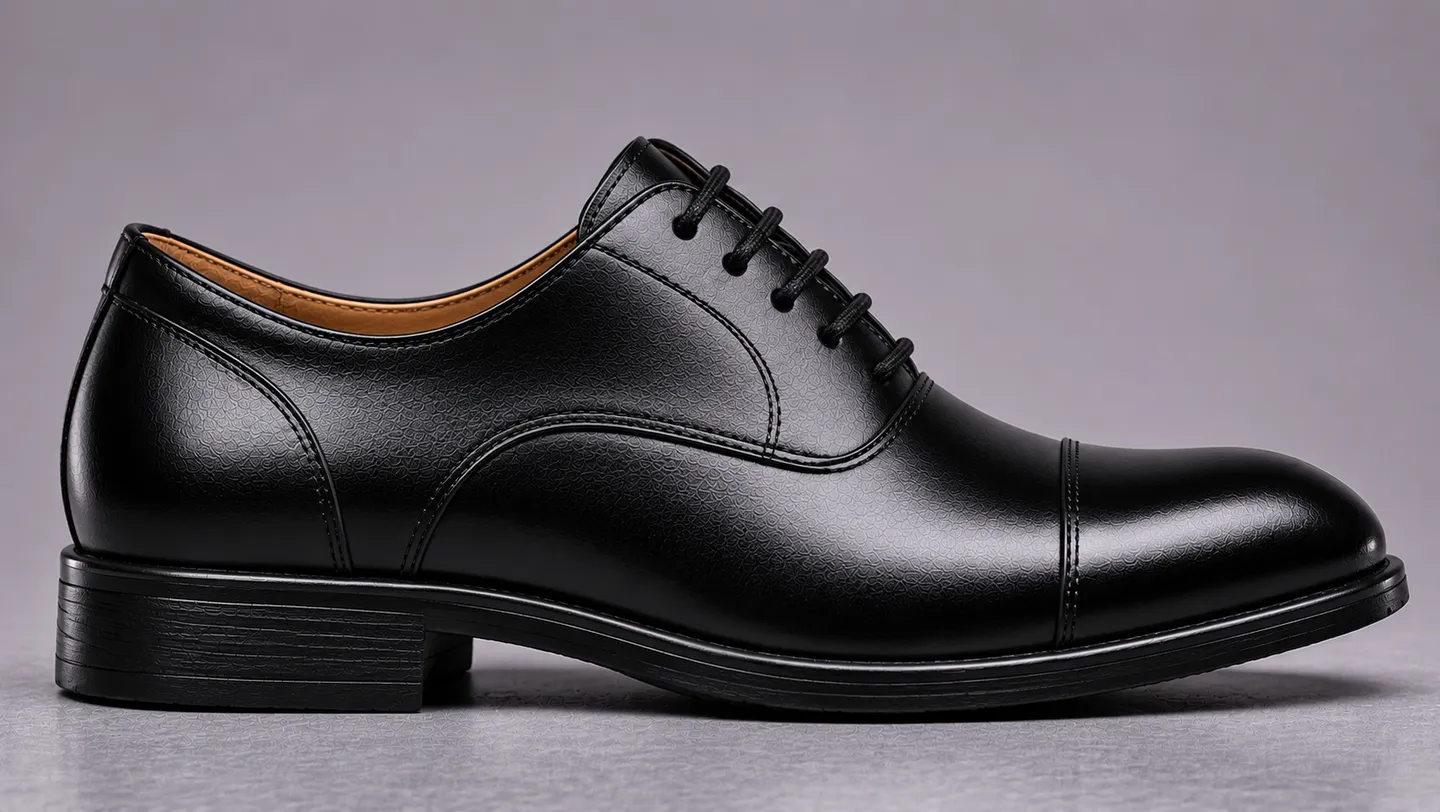
KF-OFF-001
Professional Office Lace-Ups
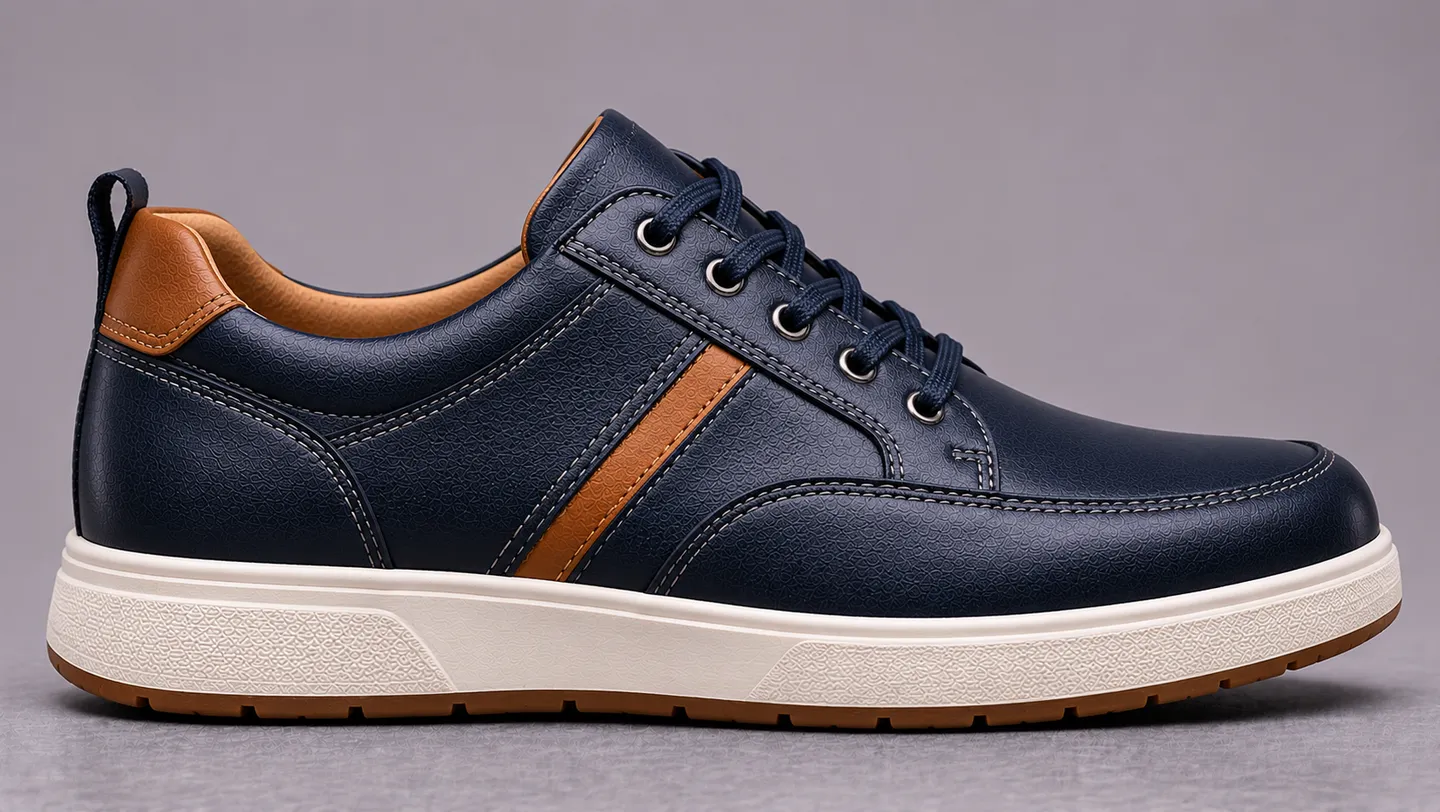
KF-OFF-003
Smart-Casual Office Shoes
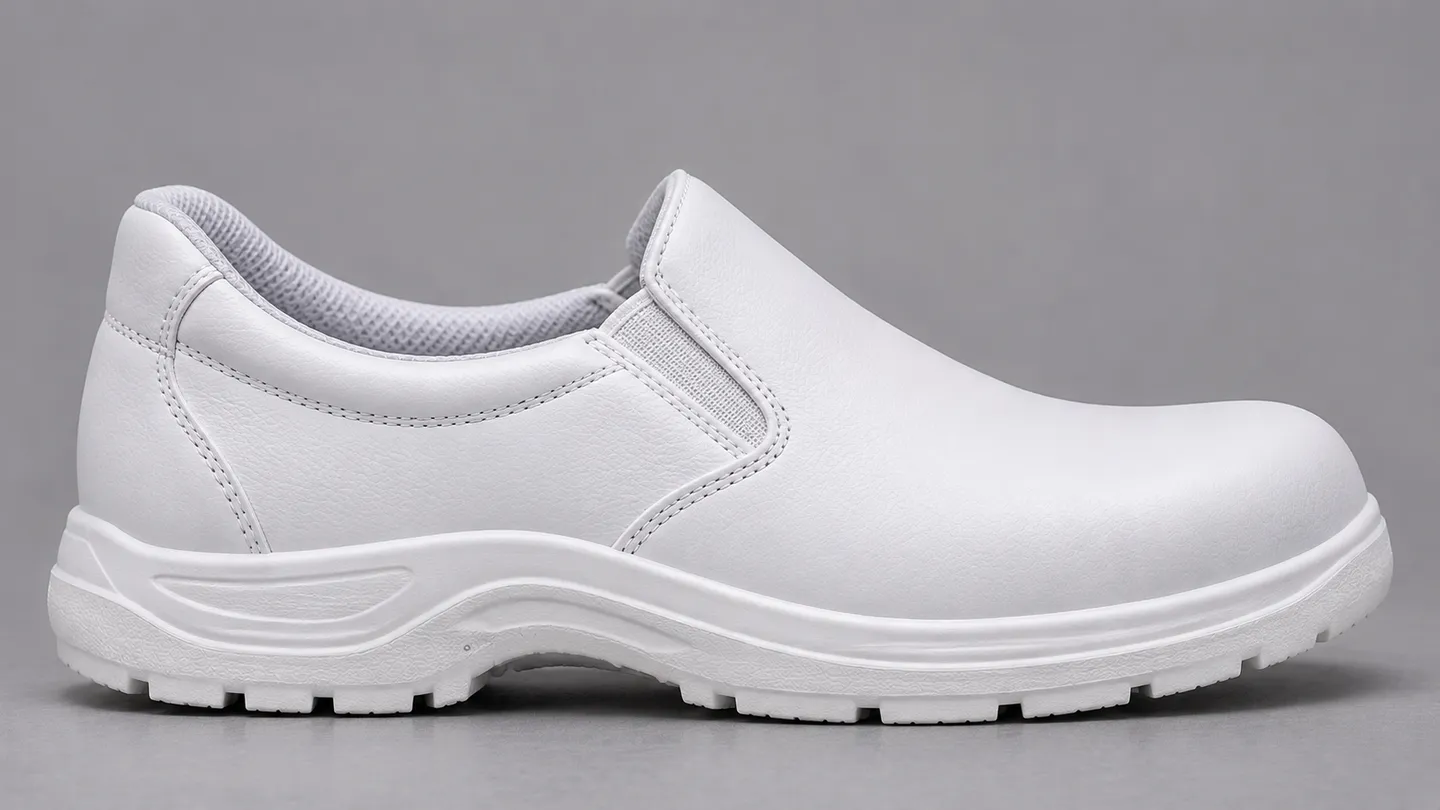
KF-SAF-004
Non-Safety Occupational Shoes
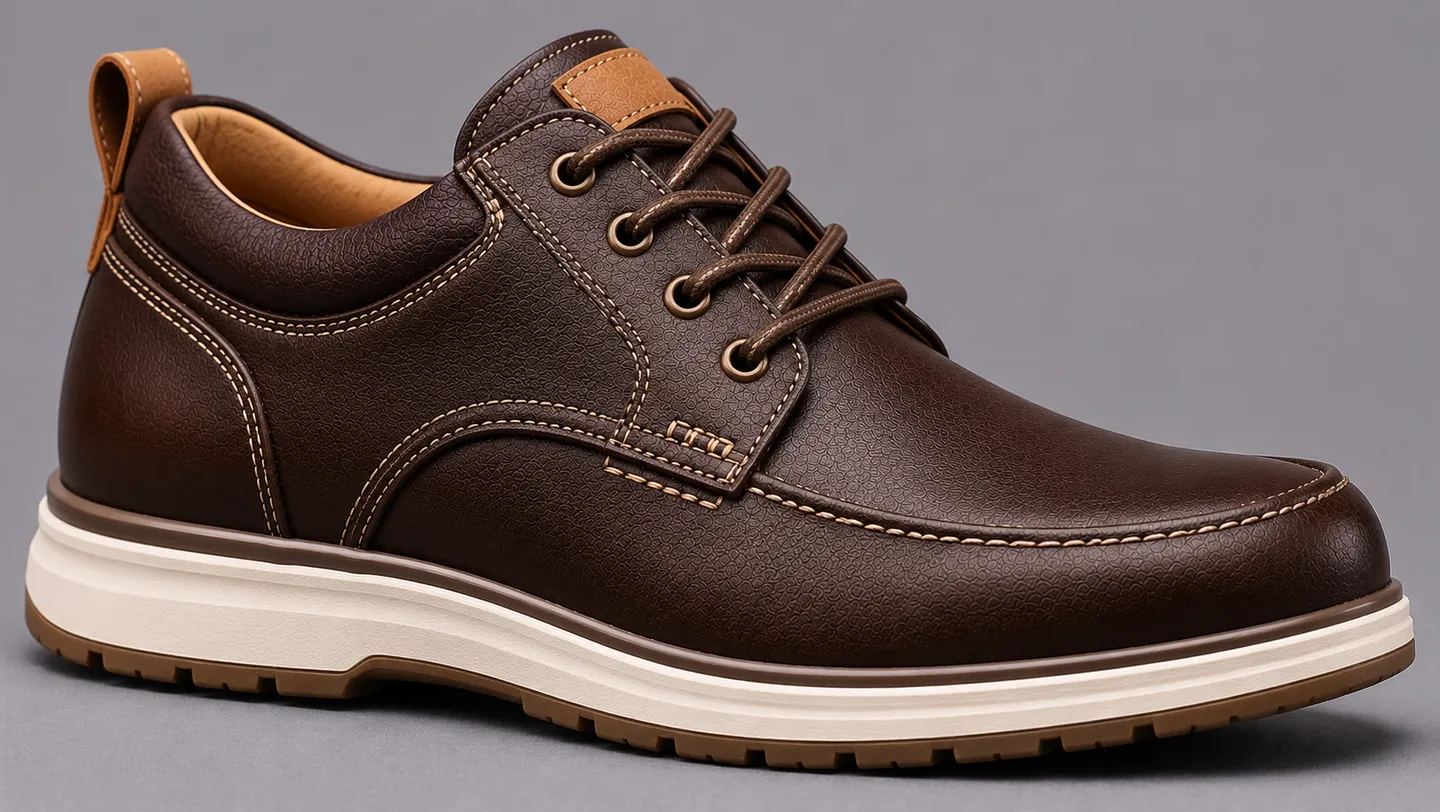
KF-FRM-004
Business-Casual Shoes


KF-OFF-004 · Office & Professional Footwear
Develop this footwear style for your brand
The quotation form opens with office & professional and KF-OFF-004 selected. You can change any specification, or upload an entirely different design, tech pack or sample photos.