KF-SNK-003Sneakers & Trainers
Running & Performance Trainers
A lightweight running-style trainer with a breathable mesh upper and a cushioned EVA midsole, developed to your design. Styled for sport and lifestyle; no tested performance claims are made.
- OEM to your design
- ODM development
- Private label
- Samples before bulk

Product overview
About running & performance trainers
Running-style trainers combine a light mesh upper with a cushioned midsole and a rubber outsole placed where wear is highest. The reference shows a black mesh upper with a fused heel detail on a white sculpted midsole.
These shoes are usually Strobel-lasted for flexibility, with the upper cemented to a pre-made midsole and outsole unit. Engineered mesh reduces the number of overlays; heat-bonded or printed overlays add structure without heavy stitching.
We develop the construction and materials you specify. Performance claims such as energy return, stability or running-specific cushioning are only made where you have independent test evidence; the product is positioned on design and materials.
OEM: your design
Send your tech pack with mesh and midsole specifications. We source matching mesh, select or tool the sole unit and build to your pattern.
ODM: developed with you
Share reference trainers and your target price and weight. We propose a mesh, overlay method and sole unit and develop the shoe through samples.
Design characteristics
- Breathable mesh upper with minimal overlays
- Sculpted EVA midsole with visible sidewall shaping
- Heel pull tab and padded heel collar
- Fused or heat-bonded overlays for structure
- Rubber outsole in high-wear zones
- Typical applications
- Sport-inspired lifestyle ranges · Gym and training footwear lines · Private-label running-style trainers for retailers · Team or event merchandise footwear
- Target buyers
- Sportswear and athleisure brands · Fitness and gym brands · Retail private-label programmes · Promotional and team merchandise buyers
Materials and construction
Materials and construction for this style
Only options technically suited to this style are listed. Availability is confirmed in your quotation.
- Typical
- Usual for this style (industry norm)
- Development option
- Possible option, confirmed at quotation and sampling
- Feasibility to confirm
- Needs factory feasibility confirmation before it can be offered
| Engineered mesh | Main upper; zoned stiffness reduces overlays. | Typical |
|---|---|---|
| Polyester mesh | Economical air mesh alternative. | Typical |
| PU-coated textiles | Toe and heel overlays, eyestay reinforcement. | Typical |
| Knitted upper | One-piece knitted upper; usually through a specialist partner. | Feasibility to confirm |
| Synthetic leather (PU) | Overlay accents. | Development option |
| Breathable mesh lining | Light mesh lining or unlined mesh vamp. | Typical |
|---|---|---|
| Padded collar and tongue | Heel collar and tongue padding. | Typical |
| Moisture-management lining | Wicking lining where supplier data supports it. | Development option |
| EVA insole | Moulded EVA sock liner. | Typical |
|---|---|---|
| Open-cell PU foam insole | Breathable foam upgrade. | Development option |
| Anatomical footbed | Contoured heel cup and arch shaping. | Development option |
| EVA | Injection or compression-moulded EVA midsole. | Typical |
|---|---|---|
| Phylon-type EVA | Finer cell structure and sharper sculpting; moulds per size. | Feasibility to confirm |
| Rubber | Rubber pods or full outsole for traction and wear. | Typical |
|---|---|---|
| TPU | Heel counters or shank pieces. | Development option |
| Strobel construction | Upper Strobel-stitched to a sock board for flexibility. | Typical |
|---|---|---|
| Cemented construction | Upper bonded to the pre-assembled midsole and outsole unit. | Typical |
| Heat bonding and heat activation | Fused overlays and no-sew details. | Development option |
| Direct-injection construction | Injected midsoles are possible with specialist partners. | Feasibility to confirm |
Construction methods are explained on the manufacturing page. No method is presented as an in-house capability unless confirmed in your quotation.
Customisation and branding
What you can customise
Upper material
Mesh type, openness and colour
Colour combinations
Upper, overlay and sole colourways
Pantone colour matching
Mesh dyed to Pantone references, subject to mill minimums
Outsole colours
Midsole and outsole colours
Sole and tread pattern
Stock outsole patterns or custom tread
Reinforcement zones
Toe, eyestay and heel overlay layout
Lace types
Flat or oval athletic laces
Tongue construction
Gusseted, padded or knit tongue
Pull loops
Heel and tongue loops
Insoles
Sock-liner material and print
Branding without new tooling
- Heat-transfer branding. Printed transfers applied with heat; good for multi-colour logos on textiles.
- Embroidered logos. Stitched logos on textile or leather panels; digitised from vector artwork.
- Tongue labels. Woven, printed or rubber labels on the tongue.
- Heel branding. Printed, embroidered, embossed or rubber-badge branding on the heel counter or tab.
- Insole printing. Logo printed or hot-stamped on the sock liner.
- Custom shoeboxes. Printed boxes to your artwork; minimums set by the box printer.
- Hangtags. Printed swing tags attached to the pair.
- Barcode labels. EAN/UPC labels on boxes or polybags, from codes the buyer supplies.
- Carton markings. Shipping marks, size breakdown and destination printed or labelled on export cartons.
Branding that needs tooling
- Screen printing. Ink printed through a screen; one screen per colour and size group.
- Rubber, TPU or metal badges. Moulded or cast badges need a mould or die per design.
- Logo moulded in the outsole. Requires a new or modified outsole mould; only with custom sole tooling.
Custom lasts, outsole moulds, cutting dies and branding tools may add tooling costs and raise minimum quantities. They are quoted separately before you commit.
Sizing and specifications
Sizing and technical specifications
Size conversions are approximate and vary by last and brand; they are not a production grading chart, and your own brand size chart replaces them if you have one. Technical measurements are set on your last and samples, recorded on the approved sample and controlled in bulk.
Trainers are often sized for a closer fit than lifestyle sneakers. Fit is confirmed on wearers, and half sizes can be planned where the sole moulds allow.
Size charts: Unisex sizes, Men's sizes, Women's sizes
Unisex sizes
One last across the run; US men's and women's equivalents shown. Unisex fit is usually based on a men's width.
| EU | UK | US men's | US women's | Foot length (mm) | Foot length (cm) |
|---|---|---|---|---|---|
| 35 | 2.5 | 3.5 | 5 | 225 | 22.5 |
| 36 | 3.5 | 4.5 | 6 | 230 | 23.0 |
| 37 | 4 | 5 | 6.5 | 235 | 23.5 |
| 38 | 5 | 6 | 7.5 | 240 | 24.0 |
| 39 | 6 | 7 | 8.5 | 250 | 25.0 |
| 40 | 6.5 | 7.5 | 9 | 255 | 25.5 |
| 41 | 7.5 | 8.5 | 10 | 260 | 26.0 |
| 42 | 8 | 9 | 10.5 | 265 | 26.5 |
| 43 | 9 | 10 | 11.5 | 275 | 27.5 |
| 44 | 9.5 | 10.5 | 12 | 280 | 28.0 |
| 45 | 10.5 | 11.5 | 13 | 290 | 29.0 |
| 46 | 11 | 12 | 13.5 | 295 | 29.5 |
| 47 | 12 | 13 | 14.5 | 305 | 30.5 |
Men's sizes
Typical men's range EU 39–47; smaller or larger sizes on request where the last allows.
| EU | UK | US men's | Foot length (mm) | Foot length (cm) |
|---|---|---|---|---|
| 39 | 6 | 7 | 250 | 25.0 |
| 40 | 6.5 | 7.5 | 255 | 25.5 |
| 41 | 7.5 | 8.5 | 260 | 26.0 |
| 42 | 8 | 9 | 265 | 26.5 |
| 43 | 9 | 10 | 275 | 27.5 |
| 44 | 9.5 | 10.5 | 280 | 28.0 |
| 45 | 10.5 | 11.5 | 290 | 29.0 |
| 46 | 11 | 12 | 295 | 29.5 |
| 47 | 12 | 13 | 305 | 30.5 |
Women's sizes
Typical women's range EU 35–42; developed on a women's last, not a scaled men's last.
| EU | UK | US women's | Foot length (mm) | Foot length (cm) |
|---|---|---|---|---|
| 35 | 2.5 | 5 | 225 | 22.5 |
| 36 | 3.5 | 6 | 230 | 23.0 |
| 37 | 4 | 6.5 | 235 | 23.5 |
| 38 | 5 | 7.5 | 240 | 24.0 |
| 39 | 6 | 8.5 | 250 | 25.0 |
| 40 | 6.5 | 9 | 255 | 25.5 |
| 41 | 7.5 | 10 | 260 | 26.0 |
| 42 | 8 | 10.5 | 265 | 26.5 |
How to measure foot length
- 01Stand on a sheet of paper with full weight on the foot, heel against a wall.
- 02Mark the tip of the longest toe and measure from the wall to the mark in millimetres.
- 03Measure both feet and use the longer one; measure later in the day when feet are largest.
- 04Compare with the foot-length column, not the shoe's outside length.
Technical measurements for this style
| Dimension | For this style |
|---|---|
| Stack height and drop | Heel and forefoot stack and the drop between them |
| Toe spring | Affects roll-off feel |
| Ball girth | Set on the last |
| Heel width | Heel hold in the collar |
| Weight per pair | Measured on approved samples |
| Insole length | Set by the last |
| Size grading | Sole moulds per size or half size |
| Construction tolerances | Agreed before bulk |
Values are set in development; no figures are published.
Sampling, production and quality
From sample to bulk order
Sampling charges, MOQ and timing are quoted per project. The full development route is explained on the manufacturing page.
Sampling for this style
- Proto sample to confirm design, pattern and construction
- Fit sample on the agreed last, checked on wearers in the core size
- Size set across the full size run to confirm grading
- Pre-production sample approved as the sealed bulk standard
MOQ for this style
- Engineered mesh is woven or knitted to order with mill minimums per colour.
- Stock sole units lower the entry point; custom midsoles need moulds per size.
Quality checks for this style
- Mesh free of snags and pulled threads after lasting
- Bond line between midsole and upper checked at flex points
Packaging
- Mesh uppers are packed with paper stuffing to hold shape.
Testing and compliance
Frameworks relevant to this style. Obligations depend on where and how the product is sold, and the brand placing it on the market carries them. General information, not legal advice.
EU REACH restrictions (Annex XVII)Market obligation
Restricts chemicals in articles sold in the EU, including chromium VI in leather in contact with skin (entry 47, limit 3 mg/kg), certain azo dyes, PAHs in rubber parts and dimethyl fumarate. Leather and component suppliers' test reports are collected per order where a buyer requires them.
EU footwear labelling (Directive 94/11/EC)Market obligation
Footwear sold in the EU must indicate the material of the upper, the lining and sock, and the outsole, using the directive's pictograms or wording. Labels are produced to the buyer's market requirements.
EU General Product Safety Regulation (EU) 2023/988Market obligation
Applies since 13 December 2024 to consumer products placed on the EU market, including traceability information on the product or packaging. The obligations sit with the economic operator placing the product on the market; we supply the production information they need.
UK footwear composition labellingMarket obligation
The UK keeps equivalent requirements for indicating the composition of upper, lining and sock, and outsole on footwear sold to consumers.
Physical test methods (ISO footwear methods)Optional test, on request
Commonly requested tests include whole-shoe upper-to-sole adhesion (ISO 17708), outsole abrasion (ISO 20871), outsole flex resistance (ISO 17707), upper flex resistance (ISO 17694) and colourfastness of footwear components (ISO 17700). Tests are run by external laboratories on request; no results are published until reports exist.
Slip resistance (ISO 13287 method)Optional test, on request
Slip resistance can be measured on the finished outsole where a buyer needs data for an open-footwear or outdoor product. Results depend on compound, tread and test surface.
Khairay Footwear does not state any certification, approval or test result for this style unless documentation exists for your order.
Sampling, quality control and shipping explainedFAQ
Running & Performance Trainers: questions buyers ask
Can you make performance running shoes?
We develop running-style trainers to your design. Performance claims require independent testing, which can be arranged on request; we do not state performance figures without reports.
Can you produce knitted uppers?
Knitted uppers need specialist knitting machines. They can be sourced through partners where feasible; this is confirmed during the feasibility review.
What midsole materials are available?
EVA is standard. Phylon-type compression-moulded EVA and other foams depend on the sole maker and tooling; we confirm options at the brief stage.
Can the upper be made without stitching?
Fused and heat-bonded overlays can replace much of the stitching. The method is chosen per design and checked for durability on samples.
How is the outsole grip tested?
Slip resistance can be measured with an ISO 13287 test by an external lab if you need data. Results depend on rubber compound and tread.
Can we order half sizes?
Half sizes need lasts and sole sizes for each half size. They are possible where the sole range includes them and are reflected in MOQ.
Can we submit our own sneaker design instead of this reference?
Yes. The reference styles are starting points. The RFQ accepts your tech pack, sketches, samples and reference photos without selecting a style.
What information do you need for a sneaker quotation?
Design files or references, upper and sole materials, construction, size range and colour split, quantities, branding, packaging and destination country.
Do you make sneakers with other brands' logos?
No. We only produce your own brand and designs. We do not reproduce trademarks, logos or protected designs of other companies.
Related reference styles
Related styles
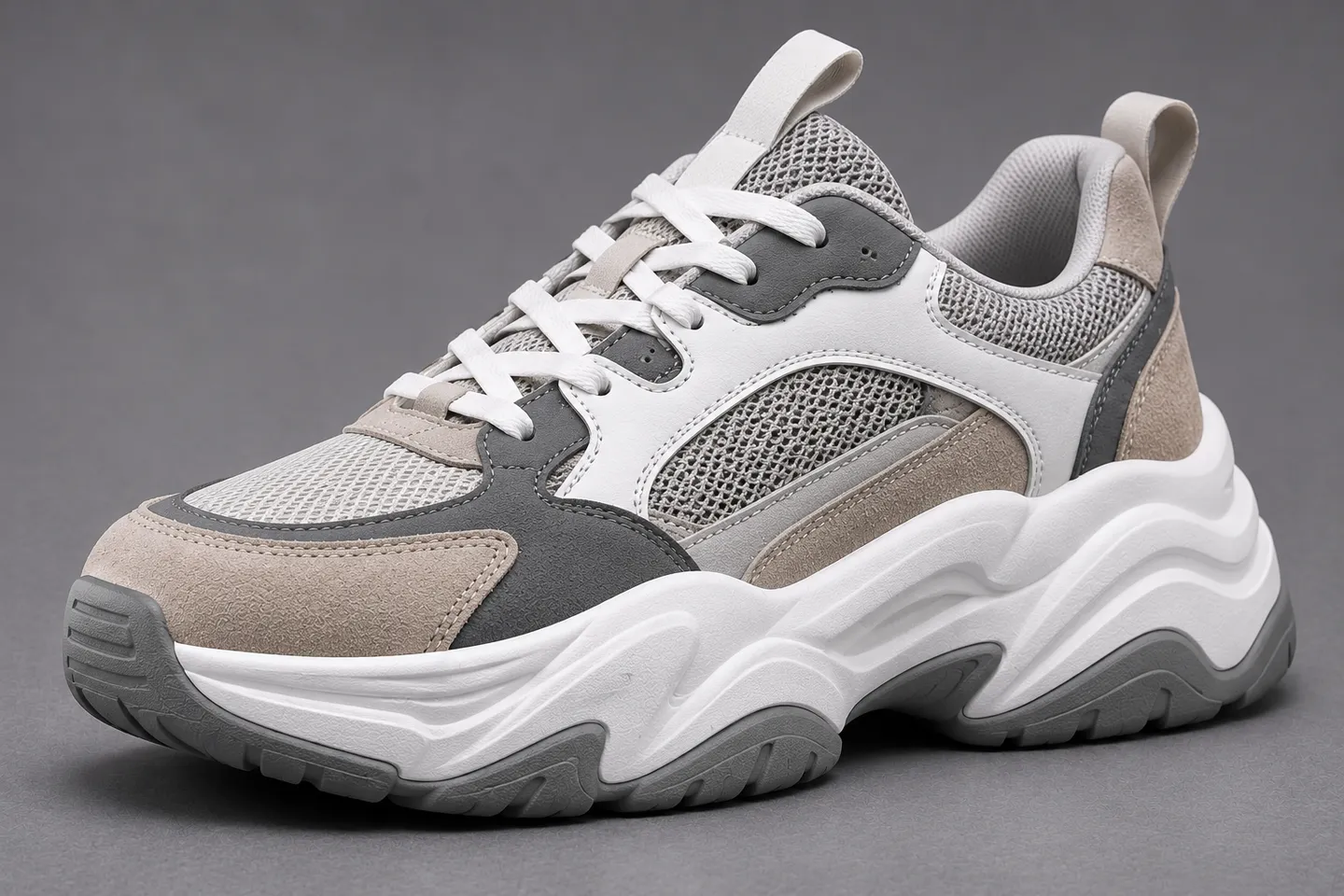
KF-SNK-002
Chunky & Retro Sneakers
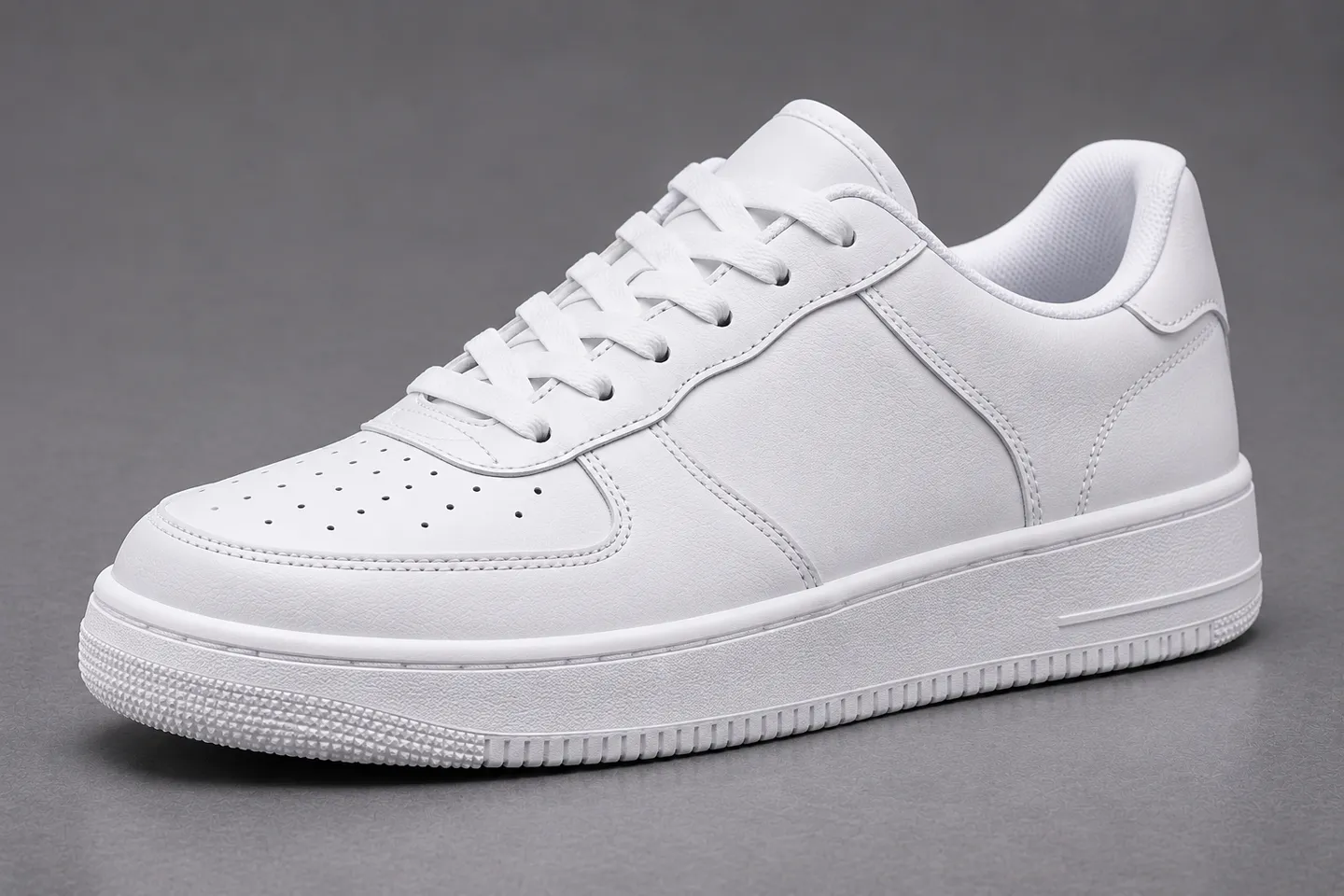
KF-SNK-001
Lifestyle & Casual Sneakers
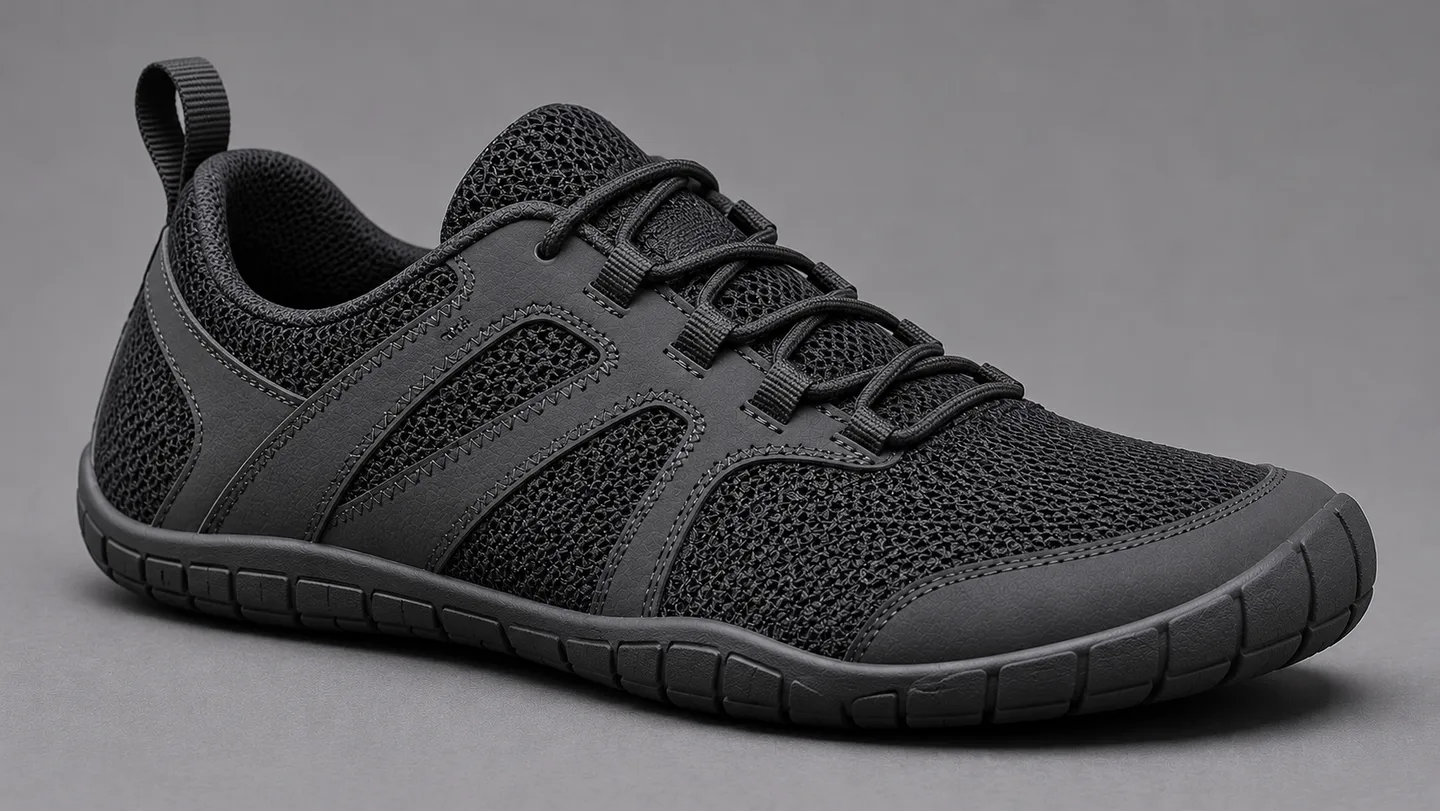
KF-CAS-006
Barefoot-Style Shoes
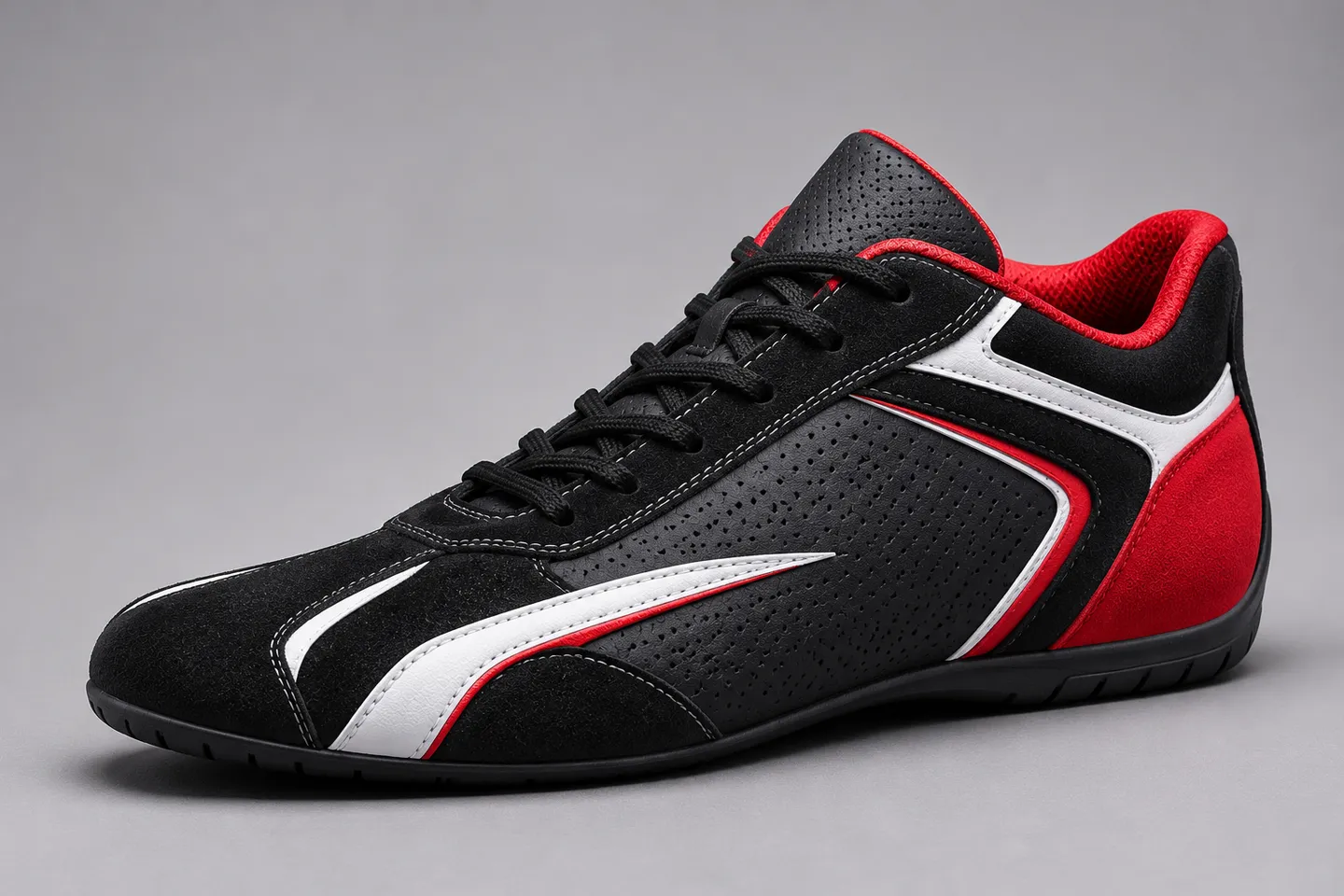
KF-KRT-002
Lightweight Racing & Driving Shoes


KF-SNK-003 · Sneakers & Trainers
Develop this footwear style for your brand
The quotation form opens with sneakers and KF-SNK-003 selected. You can change any specification, or upload an entirely different design, tech pack or sample photos.